AUDREY LECUYER

DOLLHOUSE
Doll House est un jeu de puzzle où tu incarne une poupée qui est proie constante au regard perçant et à la main punitive de son créateur. En te servant des indices laissés par d’autres poupées maintenant immobiles, tu dois trouver une façon de t’évader de ta maison de poupée tout en jouant ton rôle quand tu es observée, avant de toi aussi perdre le peu de contrôle que tu as sur ton propre corps.

MAIN TASK
-
Iterated on level layouts
-
Research for gameplay ideas
-
Create blocking layout
-
Determine the necessary assets and programming needed for the project and their priority level
-
Created and managed a Jira space, prioritizing bugs to ensure deadlines were met.
-
Organize playtest and analysing them
-
Tested levels for collisions, readability, bugs, and player flow
-
Blueprint programming and bug fixing
-
Implement Scripted Event
-
Game Design & Narrative Design
LAYOUT & BLOCKING


BLOCKING
-
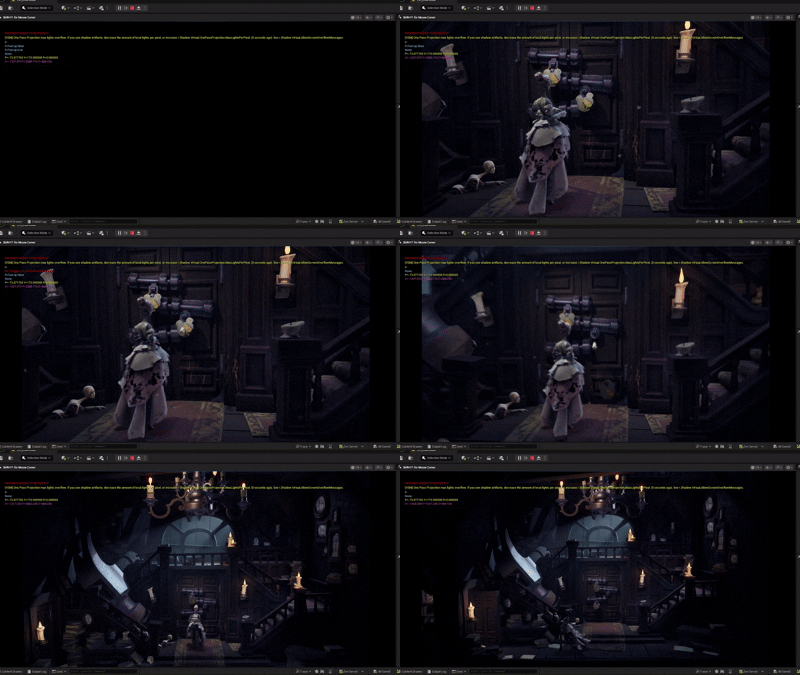
During blocking, defined player path and flow through the house
-
Started player in the hallway to clearly establish the objective: escape the dollhouse
-
Used a doll holding a key near a door to reinforce narrative tension and urgency
-
Designed the level as linear to ensure players find the key and progress through rooms
-
Ensured the key doll was unmissable by structuring mandatory progression through the hall
-
Originally planned narrative labels to deepen story context (cut during development)
-
Story is now mainly conveyed through environment and dolls
-
Each room shares a consistent feel but presents a distinct narrative through layout and puzzles
-
Guided player progression using lighting, sound cues, and environmental guiding lines
MANAGING SCOPE IN ENVIRONMENT DESIGN
For the dollhouse layout, my first iteration was too large for our single environment artist, so we reduced scope to two main rooms. I iterated on the layout to keep it achievable within our timeframe and avoid overscoping. With limited space, it was challenging to support both narrative and puzzles effectively. To solve this, I added secondary spaces like the attic, secret room, and hall to make the house feel larger and more complete. These areas reused existing assets, allowing us to expand the experience without increasing production cost.


GAME FEEL
ITERATING ON PLAYER STRESS & GAMEPLAY FEEL
While playtesting, I realized the creator wasn’t creating enough stress because players quickly got used to the current system, where they fill a bar while holding the pose and know exactly when it’s over.
To fix that, I designed a new version of the pose mechanic where the bar to fill up would be removed entirely. Instead, players would have a short timer to get into position, then must hold the pose until the creator leaves, with a limited number of mistakes before failing.
I also wanted the time the creator watches the player to be random, so they never know exactly how long they need to hold the pose, removing predictability and making the interaction more tense and engaging. This would have made the mechanic feel more stressful and immersive, but it wasn’t implemented due to time constraints.
INCREASING CONSEQUENCES & ATMOSPHERE
Based on playtester feedback, I also worked on increasing consequences and tension in the existing system.
Since players didn’t feel enough pressure when failing, we added a setback where they are sent back to the start and have to walk back to their previous position, along with a button-mashing mechanic to recover and move again.
This change was well received and made failure feel more impactful.
To push the tension further, we added sound cues of the creator walking around the house without always appearing, so players stay constantly alert and can’t be sure when he’s actually coming, reinforcing stress throughout the experience.
PUZZLE DESIGN
INTEGRATING NARRATIVE INTO PUZZLES
I designed two main puzzles and a smaller one integrated into a main puzzle to make it more interesting.
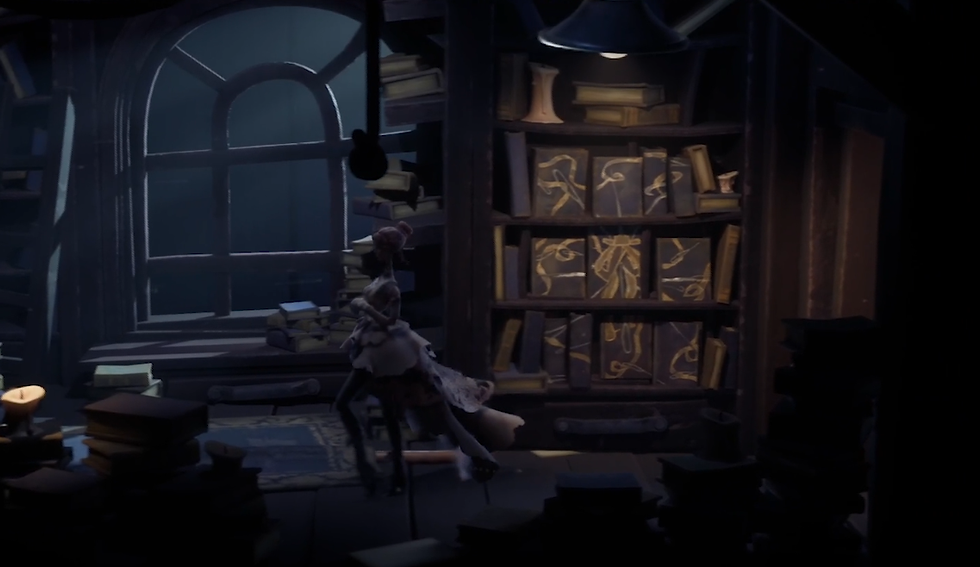
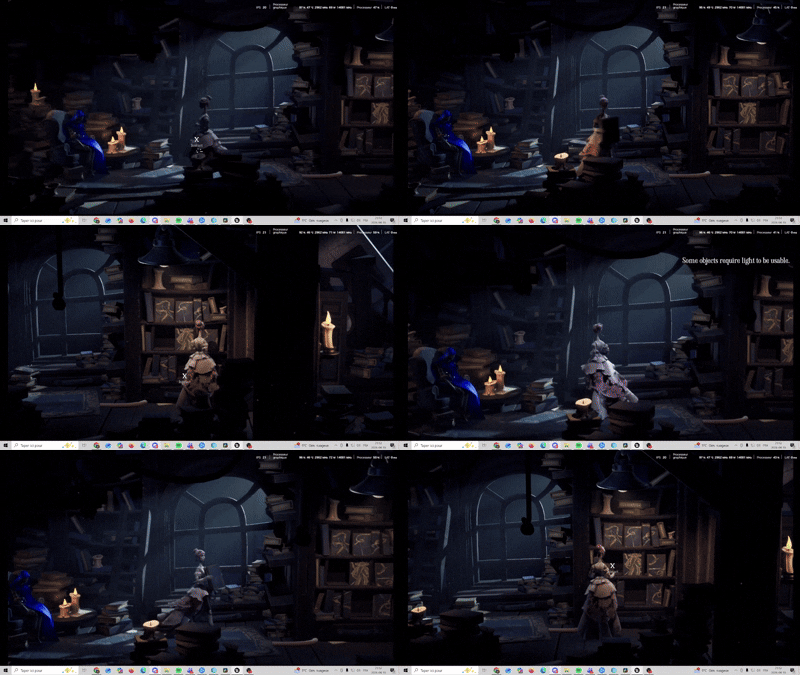
For the first room, I kept the puzzle pretty easy so players could get used to the pose mechanic while already engaging with puzzles.
I went with a book puzzle where players have to find and place the right books to rebuild a symbol. I tied that symbol directly into the narrative, representing the dolls controlled and “broken” by the creator, with pins and ribbons being added over time.
I also made the ribbons a bit messy on purpose so it’s not too obvious to solve, while also reflecting the idea of imperfect dolls. I reused that symbol across the environment so players start recognizing it naturally and connecting it to the story.
The players seemed to find it pretty cool and fun!
PUZZLE COMPLEXITY & ITERATION
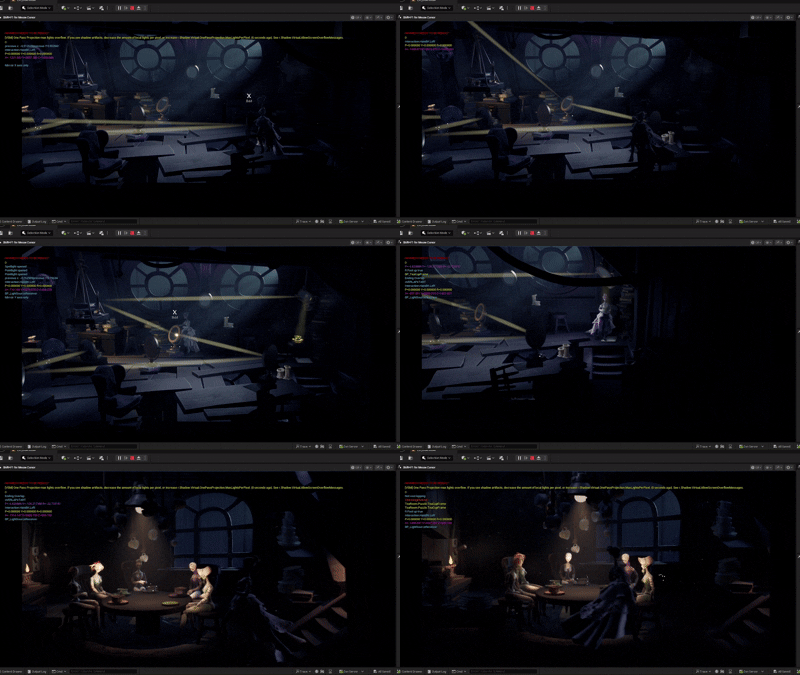
For the second puzzle, I wanted something more challenging, so I combined two puzzles together: a mirror puzzle and a simpler one.
The mirror puzzle reveals an object you need for the simple puzzle, so it creates a nice dependency and makes it interesting.
I also added a false solution to make players think a bit more and not solve it too quickly. After that, I kept the second part simpler with a doll and plate matching puzzle to balance things out.
At first, I wanted to push it further by matching unique objects tied to each doll instead of just colors, to reinforce their identity and soul and tie it with the story, but we didn’t have time to create those assets, so I had to scale it down while keeping the main idea intact. While the matching puzzle was easy, the players found the mirror puzzle fun and challenging which was what we were aiming for.
NARRATIVE DESIGN

INTEGRATING NARRATIVE INTO GAMEPLAY
In terms of narrative, the Hall introduces the creator’s violence through the destruction of the house, and while the player doesn’t fully understand at first, they gradually realize the doll was trying to escape but was stopped.
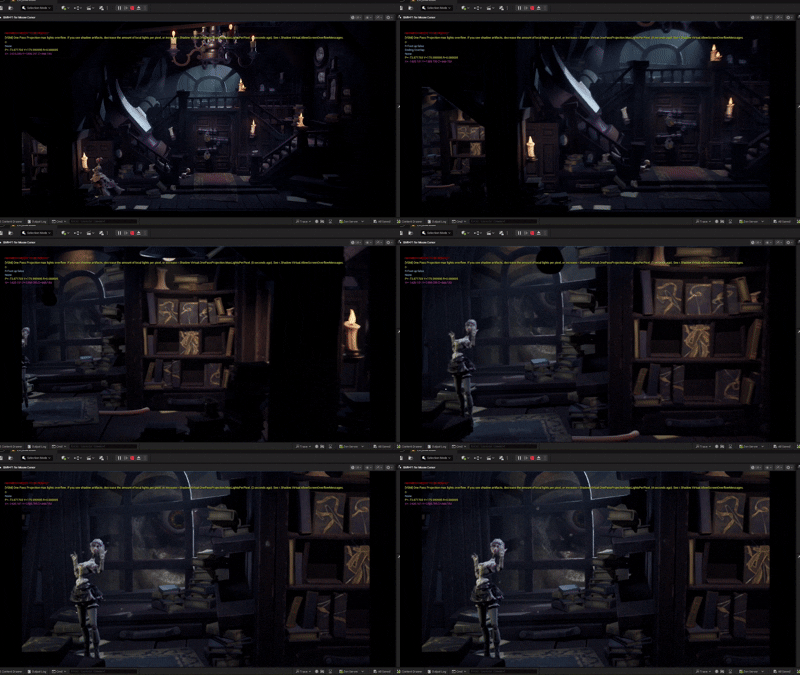
In the Library, the focus shifts to a lonely doll punished for not being “perfect,” whose soul is tied to an object hidden in a secret room; returning it brings her peace and rewards the player with a key arm.
Each doll follows this same logic, where their soul object must be restored to progress, tying narrative directly to gameplay.
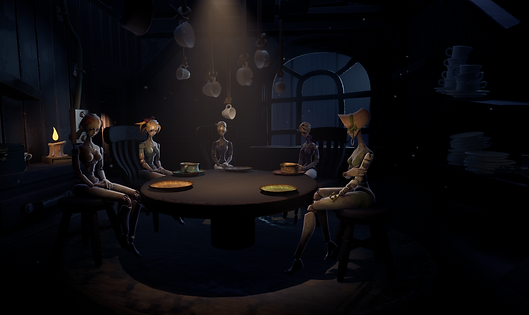
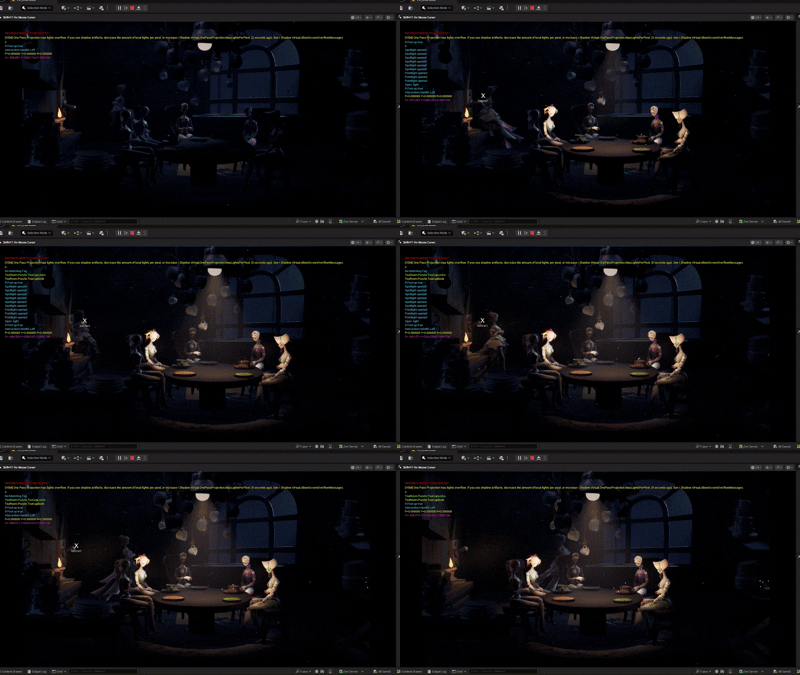
In the Tea Room, the tone becomes more theatrical, with multiple dolls connected through tea time, all needing their teacups (their soul objects) to finally be at peace and give up the final key arm.
Overall, the house itself is a facade created by the creator to give a false sense of escape, while the dolls are not — they genuinely tried to escape just like the player, reinforcing the theme of false hope.
PROGRAMMING AND BUG FIXING
INTEGRATING SCRIPTED EVENTS AND GAMEPLAY SYSTEM
Scripted events :
-
Library: interacting with the doll triggers a reveal of the required object in the secret room if the player is missing it, guiding progression toward obtaining the key arm
-
Unlocking the second lock triggers a door-opening event to the Tea Room, controlling player progression and preventing sequence breaking
-
Library cinematic tutorial shows a doll failing the pose mechanic and being taken by the creator, establishing rules and narrative stakes
-
Later return of the creator enables a safe attempt of the pose mechanic, creating a controlled tutorial-to-gameplay transition
Gameplay systems/Conditional mecanics :
-
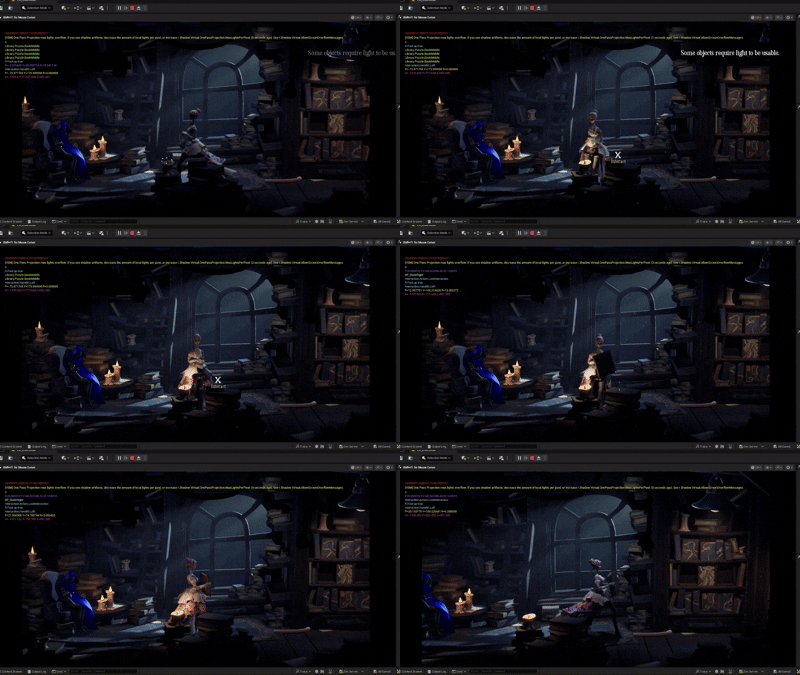
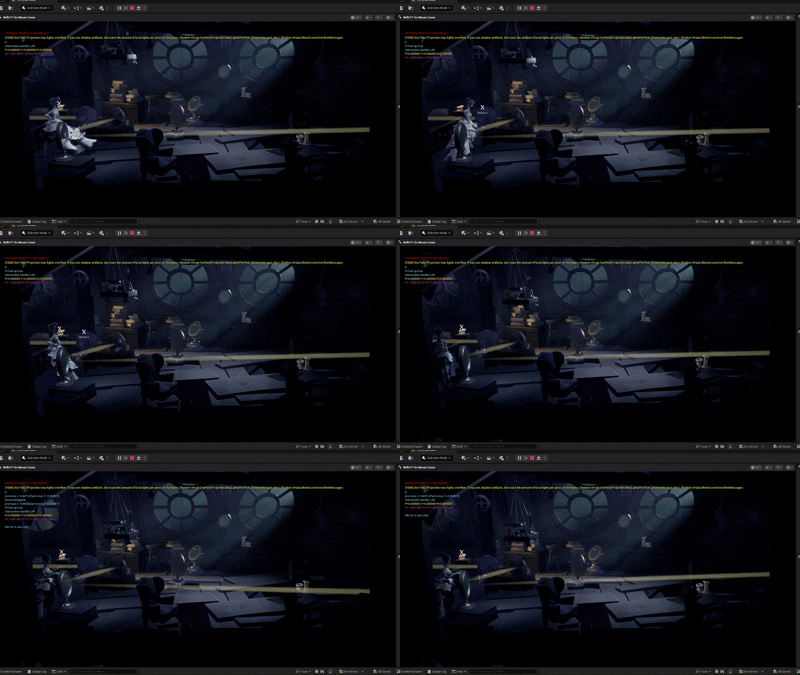
Attic: interactions are disabled until the chandelier is lifted, using a state-based gating system tied to visibility and progression
-
Light systems in the Attic and Tea Room determine what the player can see and interact with, reinforcing exploration through visibility mechanics
-
Puzzle interaction depends on environmental lighting (objects only usable when visible), creating a consistent rule-based system rather than a one-time event
INTEGRATING BLUEPRINTS AND FIXING BUGS
GAMEPLAY PROTOTYPING WITH BLUEPRINTS :
-
Created simple Blueprints to support gameplay implementation and assist the programmer
-
Implimented interactive lights that both illuminate the environment and enable object interactions
-
Similar but light switches that activate room lighting and unlock interactable elements
-
Built a pulley system for the mirror puzzle, allowing vertical movement through player interaction
-
Set up a trigger box system to adjust the creator’s timelapse, reducing frustration during longer puzzles
-
Set up Beam VFX on the trace channel with the help of the programmer
BUG FIXING :
Took on a lot of bug fixing as issues started to pile up during production, created and managed a Jira board to keep track of everything and help the team stay organized, documented bugs to make communication clearer, and used the process to get more comfortable with Blueprints I wasn’t familiar with at first.


CREDITS

Samy Mercurio - Character Artist, Concept art
Catherine Champeval - Rigging artist
Elisabeth Lesage - 3D Animator, technical animator, programming
Dalinda Soria - 3D Animator
Audrey Lécuyer - Level Designer, Game Design, programming
Alexandre Salamone - Game Design, Narrative Design, programming
Maria Larroussi - Environment Artist, Lighting Artist, Concept art
Mohamad-Najib Jalloul - Programmer
Anthony Dubeau - Compositor, Sound designer
Karen Gomes : Director
Additionnal help : Chris Castaneda
Special thanks to my mentor Laurent Ouellette Plouffe, i am grateful for all your advices!